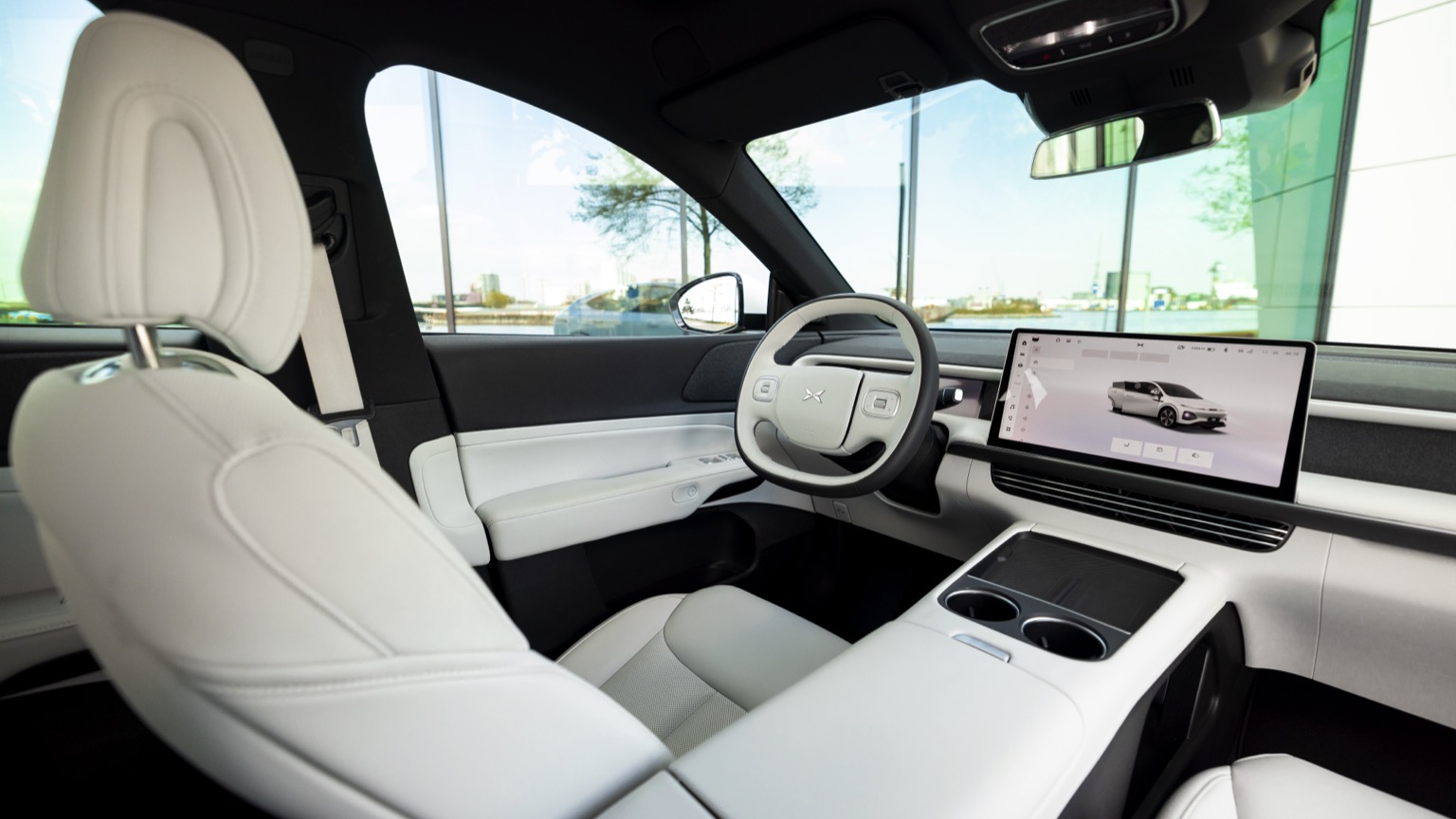
An EV SUV in Australia should offer more than a large battery and touchscreen. Look for a battery of roughly 60–90 kWh, efficient thermal management, 7–11 kW home AC charging, strong DC charging across the 10–80% window, regenerative braking, reliable route planning, OTA software updates and well-calibrated safety assistance. Australia had more than 1,100 fast-charging stations and 3,500 plugs by early 2025, while EVs reached 13.1% of new-car sales across 2025. Newer 800V models can accept more than 400 kW under suitable conditions, reducing a 10–80% charging stop to around 12–20 minutes.
Australia’s EV market now gives buyers enough choice for technology to matter as much as body size or badge. Electric Vehicle Council data recorded more than 157,000 battery-electric and plug-in hybrid sales during 2025, 38% above 2024, with battery-electric sales passing 103,000 for the first time. By December 2025, EVs represented 16.7% of new-car sales, so features once limited to expensive models are moving into mainstream family SUVs.
Battery specification is the first place to look because two SUVs with similar advertised range can use energy very differently. Packs around 60–90 kWh cover much of the medium-SUV market, while energy consumption around 16–20 kWh/100 km is a useful reference range. An 80 kWh SUV using 16 kWh/100 km can theoretically travel about 500 km before losses and reserve capacity are considered; the same battery at 20 kWh/100 km gives about 400 km.
Battery size alone does not describe an EV’s road performance. Usable capacity, consumption, battery temperature, wheel size and motorway speed all affect the distance available between charging stops.
Battery chemistry also changes how an SUV behaves over years of use. Lithium iron phosphate, or LFP, has become common because it avoids nickel and cobalt in the cathode, offers strong thermal stability and is well suited to frequent charging. Nickel-based chemistries can provide higher energy density, allowing manufacturers to package more energy into a similar physical space. By 2025, several Australian-market SUVs were using LFP packs above 80 kWh rather than limiting the chemistry to small urban EVs.
Temperature control matters in Australia because battery cells may experience summer road temperatures far above laboratory conditions. Liquid-cooled packs circulate coolant around cells or modules, while battery-management software measures temperature, voltage and current at multiple points. During fast charging, the system may reduce charging power when the pack becomes too hot. Before arrival at a charger, battery preconditioning can warm or cool the pack toward a temperature where it can accept power more consistently.
Charging architecture then becomes more relevant than a single range figure. The Australian Government reports that around 80% of reported EV charging occurs at home, where a normal power outlet supplies up to about 2.4 kW. A dedicated Level 2 home charger typically supplies 7–22 kW and can add roughly 30–80 km of range per hour, depending on the vehicle. For an 80 kWh battery, an 11 kW onboard AC charger is far more practical overnight than relying on a household outlet.
| Technology | Useful figure to check | Why it matters in Australia |
|---|---|---|
| Battery | 60–90+ kWh | Determines stored energy and affects weight |
| Efficiency | 16–20 kWh/100 km | Shows how effectively the SUV uses its battery |
| Home AC | 7–11 kW common in EVs | Suitable for overnight charging |
| DC charging | 150–450+ kW | Affects highway charging time |
| Charge window | 10–80% time | More informative than peak power alone |
| V2L | About 2–6 kW on capable models | Can run appliances or work equipment |
Public charging has also expanded quickly enough that the vehicle’s DC hardware deserves closer inspection. Australian Government figures show fast-charging locations rising from 356 in 2022 to more than 1,100 by early 2025, providing more than 3,500 plugs. The Electric Vehicle Council’s 2025 owner survey reported that 93% of respondents used public charging, compared with 85% in the previous survey, while 62% preferred dedicated DC fast charging.
Peak DC power should still be treated carefully. A vehicle advertised at 250 kW may reach that figure only during a limited state-of-charge and temperature range. A better comparison is the 10–80% time and the average power maintained through that session. Charging slows near full capacity because the battery-management system reduces current to control cell voltage and temperature, so repeated 10–80% highway stops often take less total time than charging to 100%.
Electrical voltage influences how manufacturers reach higher charging rates. Traditional EV platforms commonly operate around 400V, while newer architectures work around 800V. For the same electrical power, higher voltage allows lower current, which can reduce resistive heating and permit lighter conductors. Some current Australian-market 800V SUVs support more than 400 kW of peak DC input when connected to a charger able to supply it.
A useful real-world example is the New G6. Its Australian RWD Long Range specification lists an 80.8 kWh LFP battery, up to 451 kW DC charging, 11 kW AC charging and a claimed 10–80% DC time of 12 minutes under suitable conditions. Consumption is listed at 17.9 kWh/100 km with 20-inch wheels, while the WLTP range is 525 km. Buyers browsing suv cars australia can use figures such as consumption, charging time and battery capacity together rather than comparing range alone.
Regenerative braking adds another layer of energy management. When the driver releases the accelerator or slows the vehicle, the electric motor can operate as a generator and return part of the vehicle’s kinetic energy to the battery. Urban traffic gives the system more opportunities to recover energy than steady motorway travel. Many 2025 EVs allow several regeneration levels, while one-pedal settings can provide enough deceleration to reduce routine use of the friction brakes.
Regeneration cannot recover all energy used during acceleration. Tyre resistance, aerodynamics, electrical losses and conversion losses remain, so a stronger one-pedal setting should not be treated as free additional range.
Motor layout deserves attention in an SUV because dual-motor AWD changes both traction and consumption. A second motor can provide rapid torque control at the opposite axle without a conventional mechanical transfer case. Performance models may reach 0–100 km/h in roughly 4–5 seconds, but additional motor hardware and wider tyres can increase consumption. A rear-wheel-drive version may therefore travel farther on the same battery even when both versions use an 80 kWh-class pack.
Software now controls much of the energy system. Good EV navigation can estimate arrival charge, add suitable charging stops and prepare the battery before a high-power session. OTA updates may revise infotainment functions, route planning, charging management and selected assistance systems without a workshop visit. Buyers should check what parts of the vehicle actually receive OTA updates, since a 2025 model offering wireless map updates is not automatically capable of updating major vehicle-control software remotely.
Safety technology should be judged by independent test performance rather than the length of the equipment list. Under ANCAP’s 2023–2025 protocols, assessment covers adult and child occupant protection, vulnerable road users and safety assistance. One medium electric SUV tested in 2025 scored 90% for adult occupant protection, 91% for child protection, 83% for vulnerable road users and 79% for safety assistance, showing how separate scores can reveal differences that a five-star headline alone does not explain.
Common systems now include autonomous emergency braking, adaptive cruise control, lane-keeping assistance, blind-spot monitoring, rear cross-traffic alerts, speed-sign recognition and driver monitoring. Camera and radar hardware may look similar across brands, yet calibration can differ noticeably. An assistance system that intervenes too frequently on narrow regional roads may be less comfortable to use than one with smoother lane recognition, so an extended test drive remains useful even when both vehicles carry similar 2025 safety equipment.
Vehicle-to-load technology adds a practical use for the traction battery away from a charger. V2L lets a compatible EV supply AC electricity to appliances, camping equipment or tools, with some current SUVs offering outputs around 2–6 kW. Australia endorsed its National Consumer Energy Resources Roadmap in July 2024, while updated standards have also made it easier for manufacturers to introduce vehicles and equipment prepared for broader vehicle-to-home and vehicle-to-grid use.
Cabin efficiency affects energy use as well. A heat pump moves thermal energy instead of relying entirely on resistive heating, reducing the electricity required to warm the cabin under suitable conditions. Seat heating can consume less energy than warming the full interior, while pre-conditioning the cabin when the SUV is connected to home power leaves more battery energy available after departure. In a country where average daily driving is about 33 km, these systems often matter more to routine ownership than maximum advertised range.
Digital hardware deserves a simpler test: can important functions be reached with minimal distraction? Current EV SUVs commonly use 10–16-inch centre displays, digital instrument panels, phone keys, voice control and wireless Apple CarPlay or Android Auto. Screen size is less informative than response time and menu design. Temperature adjustment, demisting, navigation, charging information and driver-assistance settings should remain easy to reach while moving.
For regular interstate travel, compare 10–80% charging time, motorway consumption and battery preconditioning before comparing acceleration. For households charging overnight, 7–11 kW AC support and scheduled charging will be used far more often than a 400 kW DC peak. For camping or mobile work, V2L output, ground clearance, cargo capacity and AWD may matter more. By 2025, Australia had moved far enough into mass EV adoption that technology can be matched to actual use rather than selected from a specification sheet alone.