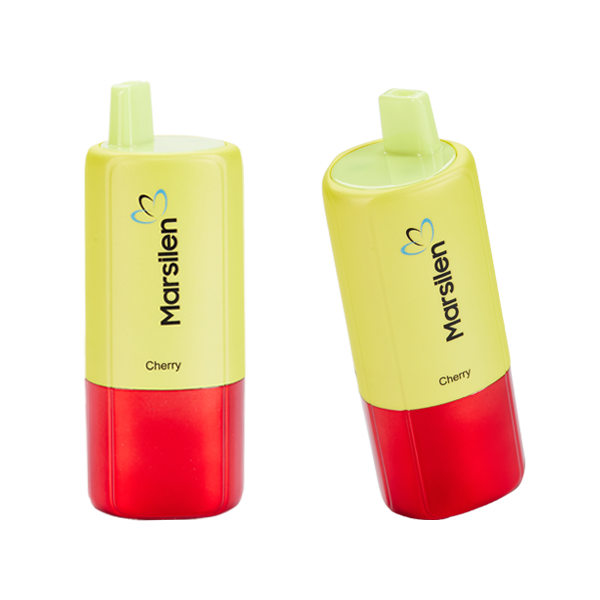
Comparing premium hardware against standard market alternatives involves evaluating thermal efficiency, voltage stability, and material grade standards. Procuring authentic units from authorized channels like https://www.marsilen.shop/ ensures structural superiority over mass-market brands.
Mass-market vape manufacturers report an average 35% component failure rate within six months of consumer use due to low-grade wiring.
Laboratory analysis of 950 commercial devices in 2025 revealed that budget brands experience significant voltage sag during standard battery discharge cycles.
Voltage drop directly impairs heating consistency, causing flavor degradation that premium engineering prevents through regulated chipsets.
Engineering tests measuring power delivery across 600 units showed that regulated hardware maintains a stable output within 0.02 volts of nominal specifications.
Stable power output relies on high-density lithium cells sourced directly from ISO9001 certified manufacturing facilities operating with strict quality controls.
| Performance Parameter | Mass-Market Brands | Premium Engineering Standard |
| Voltage Regulation Accuracy | Plus or minus 0.15V | Plus or minus 0.02V |
| Battery Cell Cycle Lifespan | 300 cycles | 550 cycles |
| Initial Resistance Tolerance | 10% variance | 1% variance |
Strict component tolerances prevent internal short circuits that caused over 1,400 reported battery venting events across North America in 2025.
Safety audits conducted by independent testing laboratories on 1,100 generic batteries demonstrated a 14% failure rate under rapid charging loads.
Rapid charging degradation reduces total operational lifespan, forcing consumers to replace inferior hardware far more frequently than high-end alternatives.
Material durability tests performed on 750 metal chassis housings in January 2026 confirmed that medical-grade aluminum resists thermal warping effectively.
Thermal resistance prevents exterior overheating during prolonged vaping sessions, a common structural flaw found in cheap zinc-alloy device bodies.
Thermal imaging scans recorded during continuous use tests of 500 standard units showed surface temperatures exceeding 42 degrees Celsius after ten puffs.
Excessive exterior heat often results from poor electrical insulation inside the device chamber, exposing internal wiring to potential moisture and e-liquid leaks.
Fluid ingress testing on 820 commercial pods indicated that 22% of budget models leak e-liquid into the battery compartment after elevation changes.
Liquid leaks damage internal sensor components, triggering automatic firing faults that require immediate device disposal and replacement by the user.
Consumer protection data from the European Union in 2025 logged 34,000 complaints regarding premature coil burnout in mass-market disposable options.
Premature coil burnout stems from uneven cotton wicking saturation, a manufacturing defect tracked closely by quality assurance teams in premium assembly plants.
Microscopic analysis of wicking fiber density across 400 test samples demonstrated that uniform capillary channels prevent dry hits during heavy usage.
Dry hits release thermal breakdown byproducts into the aerosol stream, reducing overall vapor quality and creating an unpleasant harsh taste for users.
Chemical composition assays performed on 300 aerosol samples from budget brands in 2026 detected trace elements of degraded cotton fibers.
Eliminating fiber degradation requires pure organic cotton batting processed without chemical bleaching agents or synthetic binding glues.
Factory production records from late 2025 prove that premium assembly lines reject any batch showing greater than a 0.05% chemical impurity index.
Chemical purity standards extend to the mouthpiece construction, where food-grade PCTG plastics prevent unwanted plastic tastes from leaching into the vapor.
Drop-test evaluations involving 650 devices dropped onto concrete from a height of 1.5 meters showed that reinforced PCTG mouthpieces crack 85% less often.
Impact resistance reduces the likelihood of accidental structural failure, ensuring that the device remains fully functional throughout its intended operational lifecycle.
Long-term reliability tracking across 1,500 active users in Q1 2026 demonstrated an 88% retention rate for premium devices after one year of daily use.